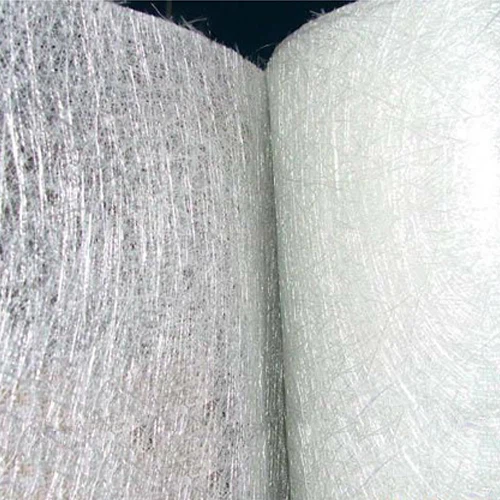
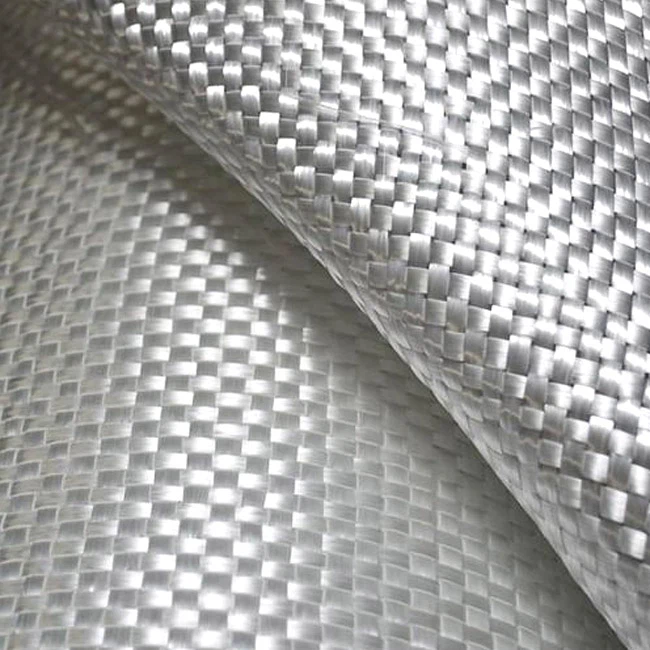
The difference between glass fiber cloth and glass fiber mat? The glass fiber industry network will popularize it for everyone. Glass fiber cloth is a non-twisted roving plain weave fabric, which is an important base material for hand-laid glass fiber reinforced plastic. The glass fiber mat is made of chopped strands of glass fiber strands, which are randomly and uniformly distributed into continuous glass fiber paper sheets by the papermaking method, and are bonded with an emulsion. Its main properties and characteristics: chemical corrosion resistance, fire resistance, flame retardant, waterproof, aging resistance, weather resistance, insulation and other characteristics. It is widely used as glass fiber reinforced plastic base cloth, anti-corrosion, heat preservation, fire retardant, waterproof material, epoxy copper clad board and electrical insulation products.
1. Medium alkali glass fiber felt is suitable for continuous machine operation or hand lay-up to make various FRP products (FRP), plates, pipes, tanks, tanks, cruise ships, bathtubs and other products.
2. E-glass fiber thin felt is used for epoxy copper clad board and electrical insulation products.
3. Alkali glass fiber thin felt is a high-quality material for battery separators, roof waterproofing, gypsum board protective panels, plastic floors and chemical pipeline linings for anti-leakage and anti-corrosion.
4. The glass fiber surface mat is used as a gel coat reinforcement mat, which is a kind of fiber distributed in all directions. Its softness makes it suitable for edges and corners, irregular shapes and complex curved surfaces, and it is suitable for a variety of composite material processes. It is rapidly compatible with various resins of EP, VE, UP and PU, forming a resin-rich layer between the fiber gaps, giving a smooth and flat surface, effectively avoiding the pitting on the surface after forming and the fiber texture hidden in the fibers. . It also highlights the enhanced interlaminar shear strength, surface toughness and excellent chemical and corrosion resistance.